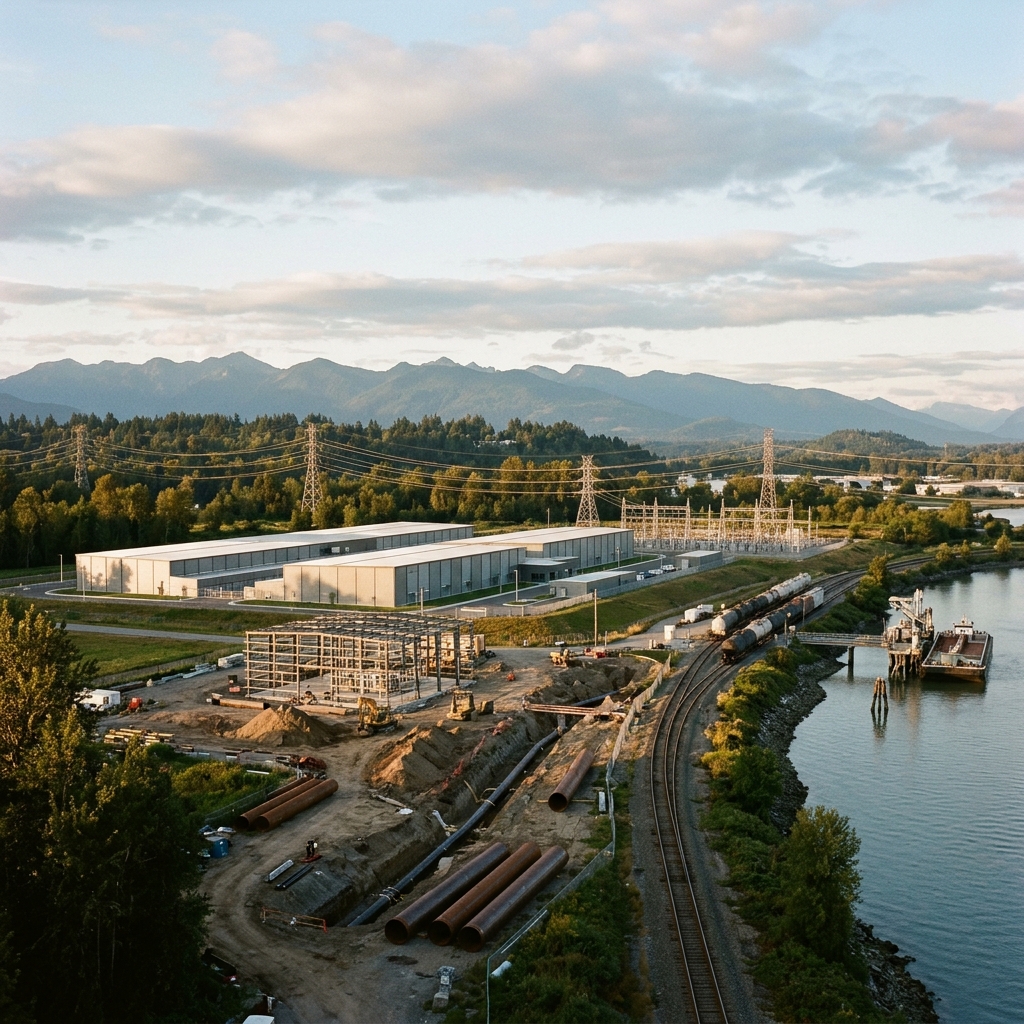
1. Quantifying Hyperscale Thermodynamic Waste Along the Border
Public hearings surrounding next-generation hyperscale computing hubs reached an unprecedented fever pitch following a Canadian physicist's stark thermal model reported by CBC. The analysis demonstrated that a multi-hundred-megawatt computing facility rejects thermal energy equivalent to roughly twenty-three Hiroshima-sized atomic detonations every day. While atomic blasts release sudden kinetic shockwaves, data processing centers transfer continuous, unrelenting thermodynamic heat into local environments. By converting nearly one hundred percent of consumed electrical power into low-grade thermal exhaust, these facilities pose unprecedented localized heat disposal challenges for surrounding municipalities and ecosystems across eastern Canada.
The physics underlying the expert witness testimony rests on the fundamental law of energy conservation. When server racks draw continuous electricity to train enterprise artificial intelligence models, virtually all electric wattage dissipates directly through heat sinks, cooling plates, and computer room air handling systems. A standard one-gigawatt facility draws twenty-four gigawatt-hours daily. This translates to roughly eighty-six terajoules of raw heat dumped directly into atmospheric air sheds or regional municipal watercourses. For cross-border power regulators, the revelation shifts the institutional debate from simple clean-megawatt availability to the thermodynamic carrying capacity of host communities.
This thermodynamic metric disrupts the standard narrative advanced by major technology developers who have historically marketed data facilities as silent, non-polluting commercial neighbors. Technology consortia competing across the Great Lakes basin and the Saint Lawrence corridor now face rigorous engineering interrogations from municipal councils. Questions now target not merely peak power demand curves, but the cumulative environmental consequence of gigawatts of low-temperature thermal dissipation. For public utility commissions, verifying the thermodynamic footprint of these massive facilities has transitioned from an academic footnote into an immediate regulatory hurdle.
2. Grid Stress and Transboundary Power Arbitrage
American hyperscalers like Microsoft, Amazon Web Services, and Google are targeting Canadian provinces to escape saturated energy markets in Northern Virginia and Ohio. PJM Interconnection grid queues are backlogged by several years, forcing technology conglomerates to pursue stable, low-carbon electricity from the Independent Electricity System Operator in Ontario and Hydro-Québec. However, the physical reality that a single campus can reject millions of gigajoules of thermal energy per week exposes the hidden costs of cross-border grid integration. Canadian grid operators must balance domestic industrial needs against high-density computational exports that strain local infrastructure.
The transmission dynamics are further complicated by seasonal ambient temperature differentials between the United States and Canada. Technology operators initially favored southern Canadian corridors because cooler annual temperatures reduce the need for active mechanical refrigeration, theoretically lowering the facility Power Usage Effectiveness metric. Yet, when facilities scale into multi-hundred-megawatt campuses, the sheer volume of heat output can create localized urban heat island effects. This microclimate warming counteracts the regional cooling advantage, driving up secondary parasitic energy demands on regional electrical distribution systems during peak summer cooling periods.
Cross-border electricity trading frameworks operated under the North American Electric Reliability Corporation must now account for these massive continuous power sinks. If provincial utilities allocate baseload hydro and nuclear generation to offshore technology firms, domestic industrial capacity faces displacement. Furthermore, the massive heat generation represents wasted thermodynamic potential. Unlike European jurisdictions that mandate district heating connections to capture data waste heat for municipal housing, North American sites largely vent this thermal output into ambient air, creating pure thermodynamic waste without public heat recovery benefits.
3. Water Consumption and Evaporative Cooling Bottlenecks
To manage the vast thermal loads described in the physicist's calculation, developers frequently rely on evaporative cooling towers, which consume enormous volumes of potable or raw fresh water. In closed-loop systems, water evaporates into the atmosphere to strip heat away from liquid-cooled server racks. A facility requiring hundreds of megawatts can evaporate millions of liters of treated municipal water daily. This creates immediate friction with local water utilities, which are rarely built to handle industrial-scale evaporation without costly, capital-intensive upgrades to regional wastewater and intake infrastructure.
The environmental risks multiply when facilities switch to oncethrough or open-loop river water cooling systems to lower capital costs. Returning water to local rivers or lakes at elevated temperatures alters riverine oxygen levels and threatens cold-water aquatic species. Provincial environmental ministries are preparing stricter thermal effluent caps under the Canadian Fisheries Act and the Ontario Environmental Protection Act. Developers unable to meet thermal discharge thresholds must transition to dry-cooling configurations, which require significantly higher electrical inputs, driving facility power usage up and aggravating the regional power grid.
Municipal leaders along key industrial transport corridors are starting to push back against fast-tracked land rezoning applications. Cities that welcomed light industrial parks are discovering that data campuses offer minimal long-term employment relative to their staggering physical resource consumption. When local citizens comprehend that an incoming facility will dump thermal waste matching dozens of wartime nuclear detonations into their immediate air shed or watershed, political support rapidly evaporates, generating prolonged administrative tribunal litigation and environmental review delays.
4. Regulatory Reform and Institutional Capital Reallocation
Institutional infrastructure funds and private equity groups deploying capital across North America must price in new environmental compliance structures. The Canadian federal government is evaluating regulatory frameworks to govern commercial artificial intelligence infrastructure under unified decarbonization and conservation standards. If authorities establish mandatory thermal recycling mandates or levy thermal emission penalties, the financial underwriting for speculative hyperscale real estate assets will shift dramatically. Developers will face significant capital expenditures to build district heat capture systems, heat exchangers, and closed-circuit radiator arrays.
Wall Street credit rating agencies and infrastructure debt providers are adjusting debt terms based on asset vulnerability to power and water moratoriums. If an independent system operator determines that a hyperscale data facility endangers grid reliability or violates seasonal thermal cooling caps, it can order curtailment. Interconnection agreements in Ontario, Québec, and bordering northern US states are increasingly integrating interruptible service tariffs. These clauses permit grid dispatchers to throttle compute operations during severe heatwaves, which directly imperils guaranteed operational uptimes demanded by institutional enterprise cloud customers.
The physicist's warning represents a permanent turning point in how data compute infrastructure is conceptualized by civil society, market analysts, and energy regulators. Hyperscale facilities are no longer perceived purely as digital conduits for virtual software transactions, but as massive physical heat engines that tax regional power systems and natural resources. Navigating this new regulatory terrain requires cross-border developers to align commercial compute roadmaps with strict thermodynamic reality, local community environmental limits, and systemic power grid realities across the Canada-US trade corridor.