1. The Bretton Woods Architecture of Post-Invasion Iraqi Crude
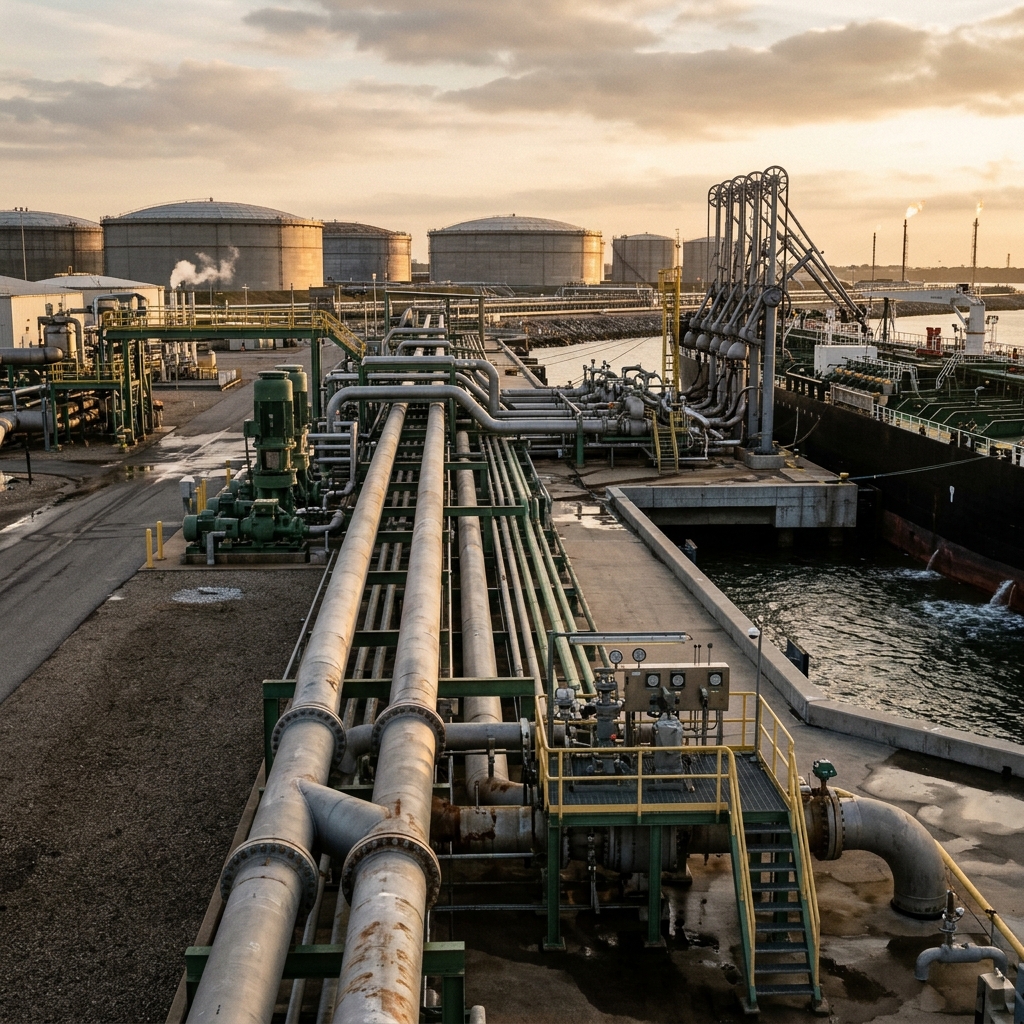
The institutional architecture governing Iraq's sovereign hydrocarbon capital dates back to May 2003, when United Nations Security Council Resolution 1483 established the Development Fund for Iraq. This legal decree mandated that all proceeds from export sales handled by the State Organization for Marketing of Oil (SOMO) bypass domestic commercial vaults and flow directly into an official government account housed at the Federal Reserve Bank of New York. While the sovereign immunity protections granted under George W. Bush's Executive Order 13303 expired a decade later, Baghdad renewed bilateral custodial arrangements that kept its dollar reserves pinned to Manhattan.
Under this arrangement, international petroleum majors, trading houses, and refiners lift crude from Basra Oil Terminal or northern transit conduits, wiring settlements denominated exclusively in United States dollars to the Fed account. The Central Bank of Iraq then submits formal requisitions to repatriate these assets back to Baghdad, converting digital claims into physical palleted bank notes or authorized electronic transfers to facilitate ministerial operating budgets. Consequently, the United States maintains immediate technical oversight over Iraq's principal balance of payments before a single dollar reaches Middle Eastern sovereign control.
This monetary design transforms the Federal Reserve Bank of New York into both a clearing agent and an involuntary escrow trustee for the world's second-largest OPEC producer. Because oil accounts for roughly ninety percent of Iraq's federal state revenues, the executive leadership in Baghdad operates with persistent dependency on administrative processing timelines in Lower Manhattan. Any disruption to standard clearance flows ripples outward, forcing regional central bankers to calibrate domestic liquidity to the operational rhythm established by the Federal Reserve and the United States Treasury.
2. Treasury Sanctions Compliance and the Dollar Auction Mechanism
Frictions within this institutional circuit intensified when the US Department of the Treasury's Office of Foreign Assets Control tightened anti-money laundering standards applied to Iraq's foreign exchange auctions. For nearly two decades, the Central Bank of Iraq ran daily currency auctions where private commercial lenders traded dinars for greenbacks, ostensibly to finance domestic import declarations. Forensic audits conducted by American regulators discovered that vast sums were routed through fraudulent invoicing schemes, ultimately supplying sanctioned entities in Iran and Syria with physical dollar paper.
In response, the New York Fed instituted an electronic clearance platform requiring Iraqi commercial counterparties to submit comprehensive transaction dossiers detailing ultimate beneficial ownership before releasing funds. The impact was immediate and disruptive: federal officials rejected upward of eighty percent of daily wire submissions for non-compliance, precipitating an acute foreign currency shortage across Baghdad merchant districts. The Iraqi dinar depreciated rapidly on unofficial street exchanges, triggering public unrest and forcing the Sudani administration to seek emergency consultations with American regulatory delegations in Washington and Amman.
The Treasury Department subsequently placed more than twenty Iraqi private banks on targeted screening blacklists, severing their correspondent access to Federal Reserve conduits. These administrative measures proved that US jurisdiction over clearing networks operates as an economic policy instrument capable of dictating domestic Iraqi banking viability. Deprived of regular access to New York transfers, non-compliant Iraqi banks faced swift deposit runs, accelerating consolidation within a financial sector caught directly between American compliance enforcement and regional trade realities.
3. Commodity Desk Exposure and North American Refining Spreads
For energy trading desks throughout North America, US administrative control over Iraqi revenues represents a systemic factor in baseline crude differential assessments. The State Organization for Marketing of Oil exports over 3.4 million barrels per day, with heavy, sulfur-rich Basra Heavy and Basra Medium grades serving as benchmark baseload supply for high-complexity cracking units. Any threat by Washington to delay hard currency transfers creates operational anxiety regarding Baghdad's ability to settle service contracts with international oil companies operating fields across Rumaila, West Qurna, and Zubair.
When dollar repatriations stall, field operators encounter severe delays in capital expenditures and government reimbursement payments, threatening output stability at southern Iraqi wellheads. Supply interruptions in this corridor immediately trigger upward price pressures on competing heavy sour grades, notably Western Canadian Select and Mexican Maya. Refiners along the US Gulf Coast, including facility operators in Port Arthur and Houston configured specifically for dense sour slates, actively hedge against potential Middle Eastern financial bottlenecks by securing pipeline barrels originating from Alberta's oil sands complex.
The structural linkage between New York Fed clearance protocols and global barrel flows demonstrates how monetary policy intersects directly with North American physical logistics. If regulatory interventions choke operational liquidity in Baghdad, crude extraction rates falter, narrowing the pricing spread between Brent and Western Canadian Select. Physical trading desks in Calgary and New York consequently evaluate Federal Reserve transfer approvals alongside traditional tanker freight manifests and refinery turnaround schedules when projecting merchant margins across continental processing corridors.
4. Bilateral Geopolitics and Baghdad's De-Dollarization Dilemma
Washington's custodial grip over oil revenues serves as a decisive diplomatic lever, constraining Iraqi prime ministers from aligning commercial policies too closely with Tehran. During recurrent bilateral friction over regional military developments, American officials have signaled that non-cooperation could lead to administrative delays in standard dollar shipments. Given that public sector payrolls, military salaries, and basic food import subsidies depend on the regular offloading of cash pallets at Baghdad International Airport, the federal cabinet possesses limited room to maneuver against United States strategic demands.
In an effort to insulate the domestic economy from foreign sovereign review, Iraqi policymakers have initiated tentative de-dollarization protocols. The Central Bank of Iraq cleared select private import transactions with China in offshore yuan, established special settlement conduits in UAE dirhams, and attempted barter mechanics for natural gas imported from Iran. Despite these initiatives, structural reliance on the dollar remains entrenched because global maritime crude offloading contracts negotiated by SOMO continue to settle through dollar-denominated letters of credit that inevitably clear via Wall Street correspondent networks.
Transitioning away from the Fed custodial account presents immense legal risks for Iraq's state balance sheet. Leaving the protective harbor of the New York Fed could expose sovereign oil deposits to international litigation, creditor attachments, and sovereign debt enforcement proceedings dating back to Saddam Hussein's regime. Until Baghdad achieves domestic financial diversification and secures legal immunities in alternate jurisdictions, the United States will retain administrative control over the financial lifeblood that sustains modern Iraq.