1. Reconfiguring the Harmonized Tariff Schedule Under Executive Order
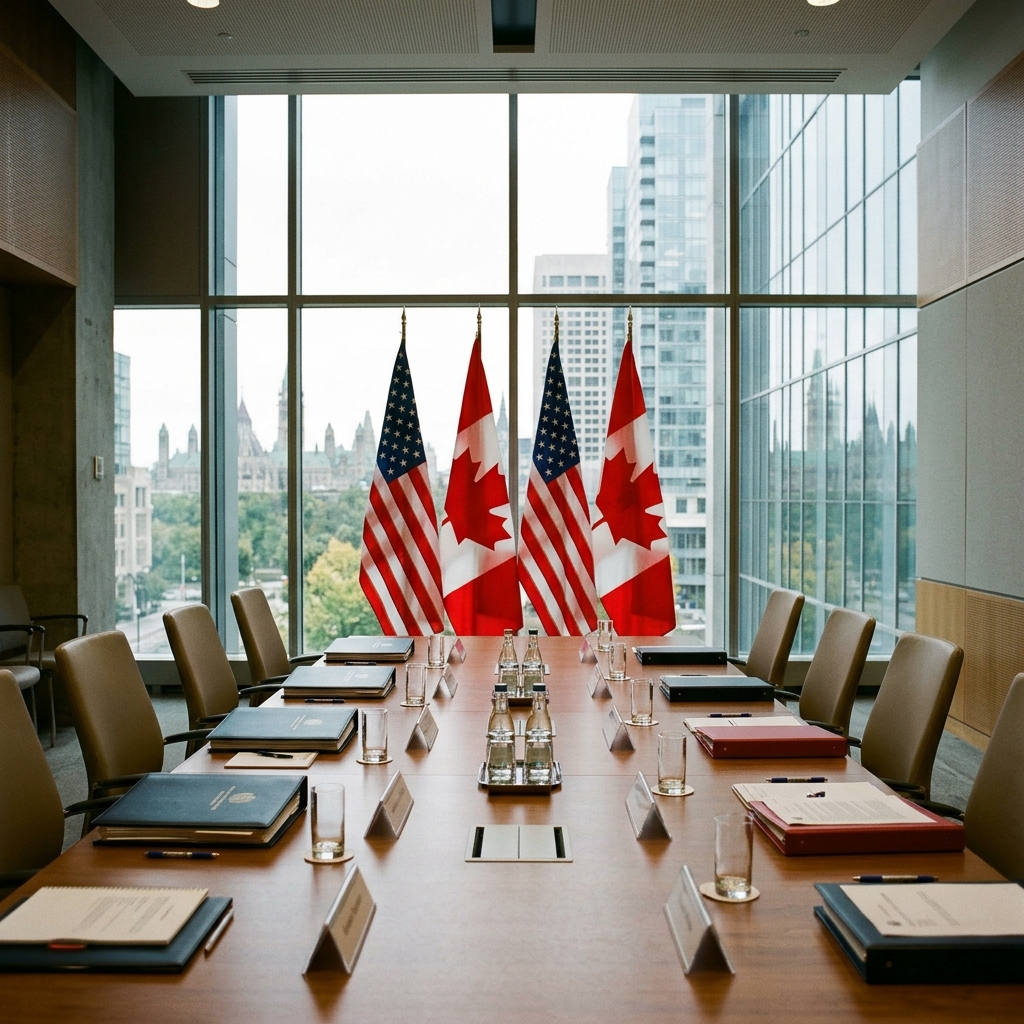
President Donald Trump has signed an executive order modifying the targeted product annexes that govern punitive 50 percent tariffs on Canadian imports, according to legislative filings monitored by Legis1. The revision realigns the administration's tariff strategy under the International Emergency Economic Powers Act, pulling selected raw materials off the penalty schedule while adding finished fabricated metals, specialty forestry derivatives, and downstream agricultural chemicals. The Office of the United States Trade Representative confirmed that the adjustments reflect direct petitions from domestic industrial consumers who faced prohibitive input costs under the previous iteration of the cross-border trade decree.
The newly modified annex targets distinct categories within chapters 72, 73, and 76 of the Harmonized Tariff Schedule, concentrating punitive levies on value-added aluminum extrusions and structural steel rather than basic billets. The measure grants temporary relief to American downstream fabricators in the Upper Midwest who rely on primary Canadian smelters in Saguenay and Kitimat. However, Canadian secondary producers face an immediate collapse in price competitiveness across border ports of entry, including Detroit, Buffalo, and International Falls, where customs brokers must execute the revised duty tables effective at 12:01 a.m. Eastern Time.
Trade counsel at Washington and Ottawa legal practices note that using emergency authorities to execute piecemeal revisions complicates bilateral customs compliance. Importers of record must rapidly update automated commercial environment entries to prevent container detentions. By narrowing the scope on crude materials while raising walls on processed inputs, the White House is seeking to compel Canadian producers to relocate secondary processing operations into American border states. The strategy tests the limits of existing supply chain integration established under the United States-Mexico-Canada Agreement.
2. Energy Preservation and Industrial Manufacturing Dislocations
The critical structural shift in the amended tariff proclamation is the explicit carve-out for Canadian heavy unrefined crude and natural gas, preserving the operation of Enbridge Line 5 and the Keystone delivery system. Federal economic advisors argued successfully that imposing a 50 percent duty on Western Canadian Select crude would immediately inflate refiner crack spreads at Midwest processing facilities, particularly in Illinois, Ohio, and Minnesota. By excluding pipeline-delivered hydrocarbons from the 50 percent threshold, the White House avoided an immediate surge in retail gasoline prices across battleground states.
The relief granted to Western Canadian energy producers contrasts sharply with the punitive conditions imposed on Southern Ontario's automotive components corridor. Auto parts classifications under chapter 87 that contain imported secondary aluminum or specialty alloy stampings will now face the full 50 percent border levy unless Tier-1 suppliers prove total continental origin. Magna International, Linamar, and Martinrea International must now audit individual component assemblies to determine whether sub-assemblies qualify for exclusion or face margin-eradicating tariffs at the Ambassador Bridge and the Blue Water Bridge crossings.
Capital markets responded swiftly to the selective revision, with the Canadian dollar weakening against the greenback as currency traders weighed the long-term drag on non-resource manufacturing. Equities tied to Canadian secondary manufacturing fell on the Toronto Stock Exchange, while U.S. steel producers like Nucor and Cleveland-Cliffs saw selective gains. Analysts point out that shifting the tariff perimeter creates deep uncertainty for cross-border logistics planning, forcing freight operators and contract manufacturers to renegotiate pricing terms that account for retroactive duty adjustments.
3. Ottawa's Counter-Strategy and Retaliatory Surtax Preparation
In response to the White House directive, the Department of Finance in Ottawa and the Ministry of Export Promotion initiated urgent consultations with provincial leaders to finalize a revised retaliatory tariff package. Canadian Deputy Prime Minister Chrystia Freeland indicated that Canada's counter-measures will match the revised dollar-for-dollar exposure by targeting exports from key congressional districts that produce specialized agricultural equipment, plastics, and consumer packaged goods. Federal officials emphasized that Canada will not absorb discriminatory measures without imposing symmetrical costs on American manufacturers operating along the northern border.
The Canadian Manufacturers and Exporters trade association warned that a retaliatory tariff cycle threatens to sever deeply integrated cross-border production systems that have operated tariff-free for decades. Ontario Premier Doug Ford and Quebec Premier Francois Legault held joint strategy discussions to coordinate provincial support packages, including loan guarantees and short-term liquidity facilities for impacted metal fabricators and precision machining operations. Provincial leaders are simultaneously lobbying border-state governors, including Gretchen Whitmer of Michigan and Kathy Hochul of New York, to emphasize the mutual economic damage caused by shifting tariff schedules.
Canadian trade litigators are also drafting emergency dispute filings under Chapter 31 of the USMCA, arguing that selective 50 percent duties violate national treatment commitments and core market access obligations. Even though formal panel adjudications under Chapter 31 require months to yield enforceable determinations, the procedural filings represent an essential step for Ottawa to establish the legal foundation for authorized, permanent trade sanctions under international commercial law should the White House maintain the elevated levies.
4. Compliance Realities for Cross-Border Logistics and Corporate Treasury
Corporate supply chain directors and customs brokerage firms are currently overhauling enterprise resource planning systems to incorporate the specific tariff code modifications outlined in the Legis1 dispatch. Logistics managers at major freight forwarders report substantial backlogs as documentation teams verify certificate-of-origin paperwork against the updated exclusion lists. Trucks hauling mixed loads across border crossings in Ontario, Quebec, and British Columbia face enhanced secondary inspections from U.S. Customs and Border Protection officers auditing tariff classification numbers to ensure non-exempt products are not misclassified as exempt primary inputs.
Corporate treasuries are actively restructuring bilateral supplier contracts, moving from traditional Delivered Duty Paid terms to Ex Works arrangements to shift regulatory border exposure back onto buyers. Multinational firms with dual production footprints are exploring inventory mitigation strategies, such as utilizing foreign trade zones and bonded warehouses in Detroit and Buffalo to defer tariff realization. The abrupt revision demonstrates the operational vulnerability of modern lean inventory models that rely on rapid multi-pass cross-border transfers during the assembly of a single finished product.
Longer-term commercial relationships face fundamental renegotiation as corporate legal teams draft force majeure and material adverse change riders into purchase agreements. Commercial banking institutions in Toronto, Montreal, and New York are tightening working capital credit lines for mid-market suppliers heavily reliant on cross-border shipments subject to the 50 percent duties. As Washington continues to adjust product categories unilaterally, corporate boardrooms are prioritizing geographical redundancy over pure cost efficiency, permanently altering the investment parameters of the North American economic corridor.