1. Pacific Gateway Pressures and the Cascadia Corridor
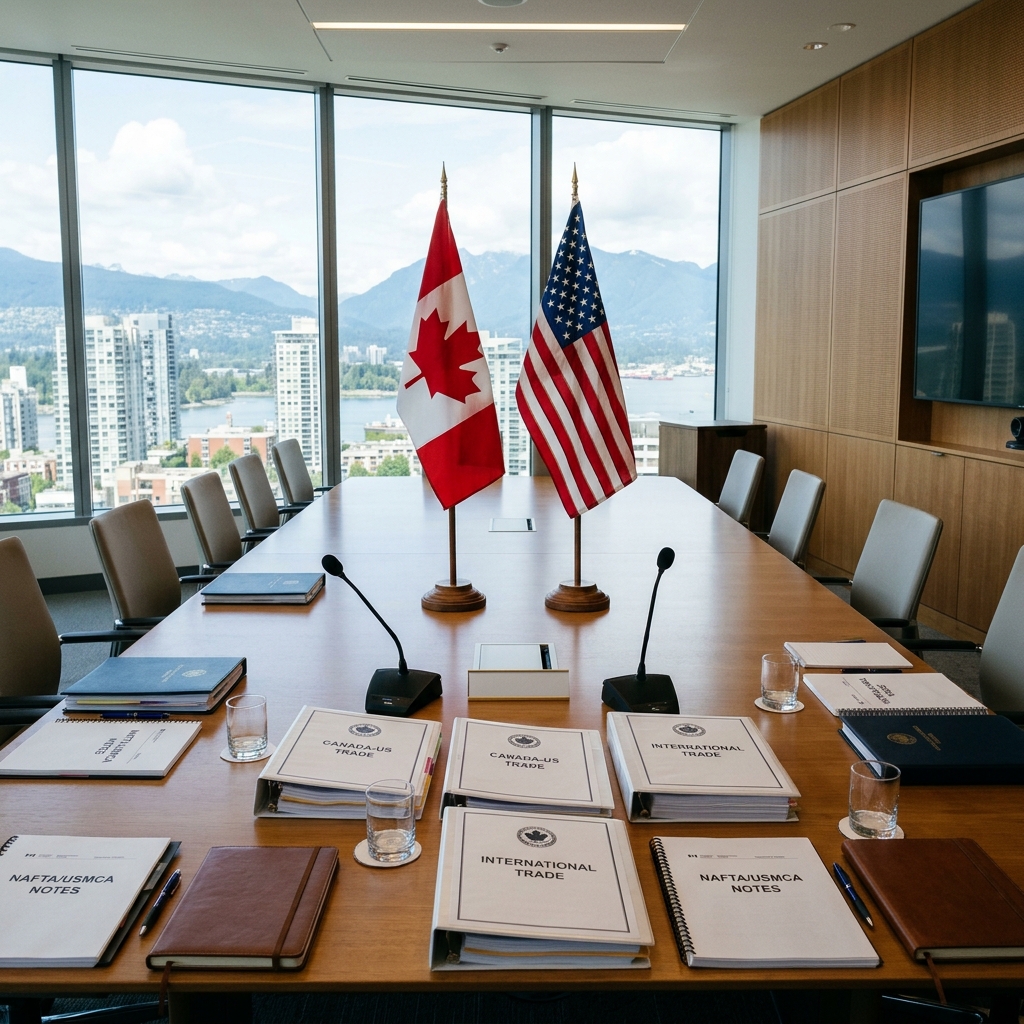
The Capilano Courier's assessment of cross-border trade hostilities brings localized clarity to a macroeconomic dispute often dominated by Ottawa and Washington policy rhetoric. From North Vancouver, the vantage point looks directly onto the Port of Vancouver, Canada's largest maritime export terminal. The publication highlights how British Columbia's integrated supply routes are vulnerable to US tariff measures. Cross-border freight traversing the Pacific Highway border crossing at Blaine, Washington, carries billions of dollars in specialized raw materials, manufactured components, and food products annually. Any sustained trade dispute instantly translates into higher clearance costs and logistical friction for regional logistics operators.
Local business enterprises along the Cascadia economic corridor operate under high capital interdependency with counterparts in Washington State and Oregon. The Capilano Courier notes that manufacturing hubs in the Lower Mainland rely on American industrial inputs to process intermediate goods, many of which return to US buyers. When trade frictions escalate into retaliatory tariffs, this dual-direction commerce faces compounding duties that undermine operating margins. Corporate treasuries cannot easily hedge against policy shifts that turn duty-free shipments into contested cargo subject to sudden countervailing audits by US Customs and Border Protection.
The geopolitical reality outlined by the Capilano Courier reflects a broader shift away from post-NAFTA regulatory harmonization. British Columbia's economic ties with the US Pacific Northwest have historically cushioned regional businesses from political disputes originating in central capitals. However, blanket tariff policies and national security justifications issued by Washington leave few exemptions for regional integration. Port terminals, freight forwarders, and intermodal rail services operated by Canadian National and Canadian Pacific Kansas City face sudden volume volatility when bilateral trade actions depress transborder demand.
2. Softwood Lumber and the Enduring Resource Conflict
At the core of British Columbia's trade grievances documented by the Capilano Courier is the perennial softwood lumber dispute. For decades, the US Department of Commerce has levied countervailing and anti-dumping duties on Canadian timber, alleging that British Columbia's provincial stumpage fee system functions as an unfair government subsidy. The Capilano Courier emphasizes that current trade tensions compound these existing penalties, pushing combined duties to punitive thresholds that threaten sawmill solvency across the Interior and Coastal forest sectors. Small forestry communities bear the immediate brunt of these cross-border legal actions.
Legal challenges adjudicated through Chapter 10 of the Canada-United States-Mexico Agreement and World Trade Organization appellate bodies have yielded repeated procedural victories for Canadian producers without ending American enforcement actions. The Capilano Courier observes that US homebuilder demand often conflicts with protectionist lobbying from the US Lumber Coalition, creating price volatility for North American construction markets. British Columbia lumber producers, already managing reduced timber supply due to beetle infestations and forest preservation mandates, find their addressable export market severely curtailed by recurrent border taxes.
Corporate executives within the forestry sector have responded by accelerating capital deployment directly into the southern United States. Major British Columbia forest products companies, including West Fraser Timber and Canfor, have acquired manufacturing footprints in Georgia, Alabama, and the Carolinas to circumvent trade barriers entirely. The Capilano Courier points out that while this corporate diversification protects balance sheets, it shifts high-paying processing employment and capital investment away from Western Canadian facilities, leaving the domestic industrial tax base increasingly vulnerable to long-term erosion.
3. Critical Minerals and Cross-Border Regulatory Divergence
Beyond traditional commodities, the Capilano Courier highlights critical minerals as the modern frontier in Canada-US trade diplomacy. British Columbia holds substantial reserves of copper, molybdenum, germanium, and zinc, resources essential to North American defense and clean technology supply chains. While both national federal governments proclaim a desire to construct an integrated, secure continental minerals bloc, trade disputes and tariff policies introduce significant counterparty risk for mining joint ventures and mineral processing facilities operating near the Pacific Coast.
The regulatory architecture governing these extractions remains contentious. The Capilano Courier examines how US industrial subsidies under the Inflation Reduction Act incentivize domestic refining, occasionally clashing with Canadian environmental assessment timetables and export regulations. Mining exploration companies based in Vancouver - the global hub for mineral exploration finance - face capital allocation dilemmas when US trade policies threaten tariffs on processed materials. Cross-border investors demand regulatory certainty, yet unilateral trade enforcement creates volatile spreads between London Metal Exchange cash contracts and physical delivery prices at US industrial destinations.
The friction extends into downstream technology applications. The Capilano Courier reports on local technology ventures and university research clusters in Metro Vancouver that partner with US defense and energy laboratories. When bilateral relations sour over broad tariffs, collaborative research agreements and cross-border tech transfers face heightened scrutiny from US export control agencies. The conflation of commercial trade defense with national security statutory authorities, such as Section 232 of the Trade Expansion Act, leaves high-tech and resource firms exposed to arbitrary policy reversals.
4. Institutional Hedging and Cross-Border Corporate Strategy
In response to the volatile trade climate analyzed by the Capilano Courier, corporate legal teams and supply chain planners are overhauling cross-border operational frameworks. Enterprises are revising master service agreements to incorporate specific tariff pass-through clauses, force majeure protections, and alternative sourcing schedules. Rather than relying on open-ended delivery terms, regional manufacturers now insist on structured Incoterms that explicitly assign customs clearance liabilities and tariff surcharges, insulating working capital from sudden border adjustments imposed by executive orders.
Institutional capital allocators are recalibrating risk premiums across sectors heavily exposed to US protectionism. The Capilano Courier notes that small and mid-cap Canadian companies with concentrated sales south of the border trade at increasing discounts compared to diversified multinational operators. Private equity firms and corporate acquirers operating in the Vancouver market now conduct exhaustive trade compliance diligence before finalizing acquisitions. They evaluate how changes to rules of origin, regional value content thresholds, and non-tariff border barriers could compress target EBITDA margins under hostile trade scenarios.
The long-term trajectory detailed in the Capilano Courier commentary suggests that the era of frictionless North American commerce is permanently finished. As federal authorities prepare for the statutory joint review of CUSMA in 2026, Canadian commercial entities must operate with heightened regulatory vigilance. Maintaining cross-border profitability requires structural hedging, local political intelligence, and operational agility to withstand ongoing tariff arbitrations, unilateral regulatory enforcement actions, and persistent economic nationalism originating from Washington.