1. Congressional Realignments and the USMCA Review Mechanism
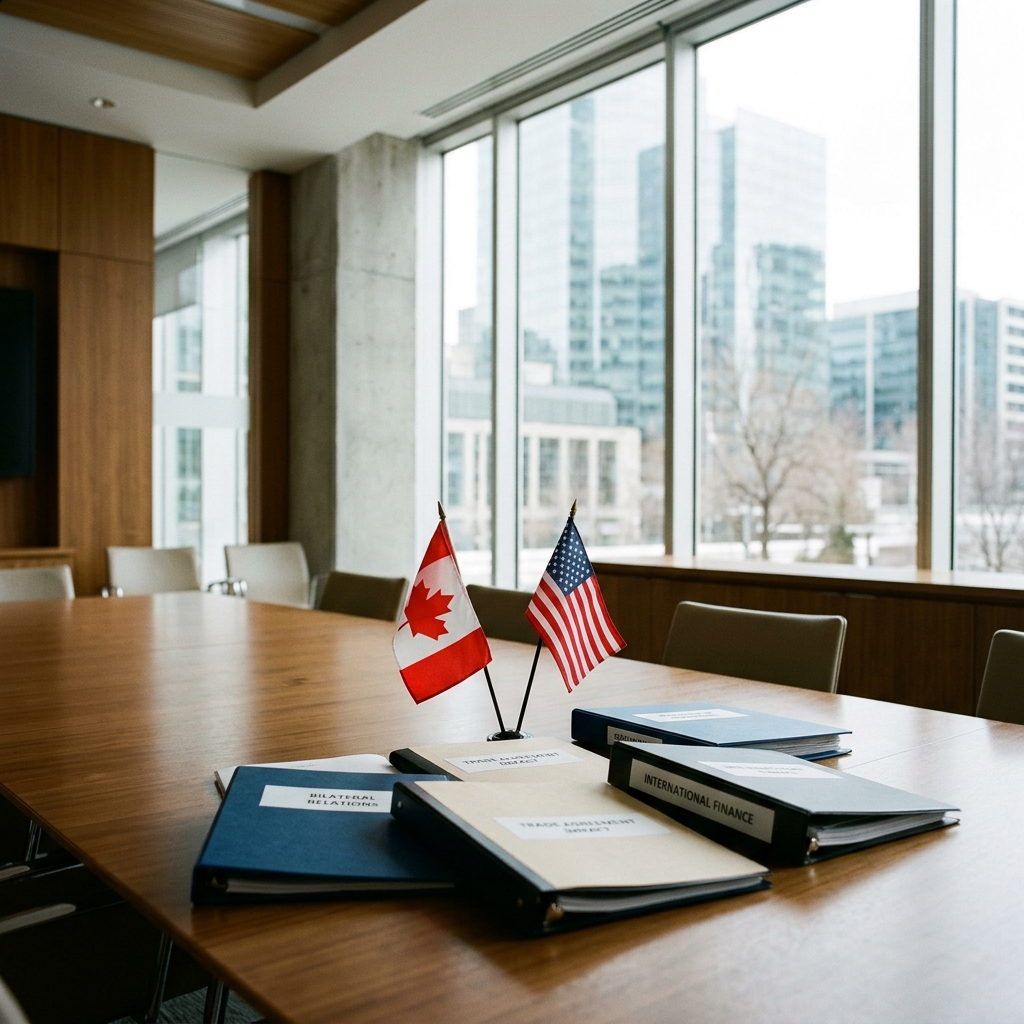
The electoral reshuffling of the United States Congress introduces direct administrative frictions into the Canada-United States trade corridor, which handles over two billion dollars in bilateral goods and services daily. As reporting from CTV News highlights, changing committee gavels across Capitol Hill fundamentally alters how American trade statutes are wielded against foreign partners. The House Ways and Means Committee and the Senate Finance Committee hold constitutional authority over foreign commerce, meaning leadership changes dictate legislative scrutiny on existing trade compacts. For Canadian trade officials in Ottawa, the immediate concern rests on how newly seated congressional leaders will interpret compliance under the Canada-United States-Mexico Agreement.
A central focus for corporate boardrooms and sovereign trade desks is the preparation for the mandatory 2026 CUSMA joint review mandated by Article 34.7 of the agreement. Under this statutory mechanism, the parties must meet to review the operation of the agreement, address recommendations, and decide whether to extend the pact for another sixteen-year term. While the original passage of the agreement in 2020 enjoyed bipartisan support, shifts in congressional membership bring more nationalist and skeptical trade voices to the fore. Lawmakers seeking to demonstrate domestic industrial protectionism are expected to pressure the Office of the United States Trade Representative to extract fresh concessions from Canada.
Specific policy disputes already primed for escalated congressional oversight include Canada's domestic administration of tariff-rate quotas on dairy imports, alongside proposed unilateral measures such as the Canadian Digital Services Tax. Canadian exporters across key provinces, notably Ontario and Quebec, face renewed scrutiny from border-state lawmakers who view Canadian marketing boards and regulatory frameworks as structural trade barriers. As CTV News identified in its coverage, the midterm outcomes do not merely reflect domestic political sentiment within the United States; they establish the legislative parameters within which cross-border commerce, customs enforcement, and trade litigation will function over the next legislative cycle.
2. Industrial Subsidies, Buy America, and EV Supply Chains
Legislative priorities in Washington remain anchored to reshoring critical manufacturing capabilities, a policy focus that frequently places Canadian suppliers in a vulnerable position. The passage of the Inflation Reduction Act and the Infrastructure Investment and Jobs Act introduced stringent domestic procurement rules and local content thresholds for federal spending. While Ottawa successfully negotiated language that included North American assembly qualifications within the Section 30D clean vehicle tax credit framework, ongoing legislative implementation under a divided or reorganized Congress threatens to reopen these exemptions. Lawmakers focused on domestic manufacturing employment frequently demand narrower definitions of domestic sourcing that favor continental neighbors less.
The Automotive Parts Manufacturers' Association in Toronto and Canadian vehicle assembly operations managed by Ford, General Motors, and Stellantis rely entirely on frictionless transit across the Detroit River and Niagara frontiers. Any regulatory tightening of tracing mechanisms for battery precursor materials or electrical components threatens integrated production schedules. If congressional committees mandate that intermediate processing must occur entirely within the United States border to qualify for federal grants, Canadian capital investments in regional processing hubs, such as the battery material plants in Becancour, Quebec, face immediate economic headwinds. Cross-border capital expenditure allocations will remain uncertain until federal procurement guidance is fully clarified.
Beyond automotive manufacturing, Buy America provisions embedded in United States infrastructure authorizations continue to exclude Canadian steel, concrete, and engineering firms from competing for municipal public works projects. Canadian Manufacturers and Exporters has repeatedly warned that without formal reciprocal procurement exemptions, Canadian companies remain shut out of hundreds of billions of dollars in federally financed American projects. The political climate following the midterm elections provides little incentive for American lawmakers to grant sweeping waivers to foreign jurisdictions, forcing Canadian trade envoys to pursue piecemeal, state-by-state procurement arrangements that lack the certainty of comprehensive federal pacts.
3. Energy Security, Cross-Border Pipelines, and Resource Politics
Cross-border energy logistics represent another volatile area directly influenced by the composition of the United States Congress. Bilateral energy trade encompasses crude oil shipments from the Western Canadian Sedimentary Basin, hydroelectric exports from Hydro-Quebec to New York and New England, and integrated natural gas networks spanning the continent. The ongoing legal and regulatory dispute surrounding Enbridge Line 5 in Michigan underscores how local and state political dynamics intersect with federal trade policy. The Canadian government previously invoked the 1977 Transit Pipelines Treaty to prevent unilateral state action, a legal posture that continues to generate friction among Great Lakes lawmakers on Capitol Hill.
A shifting balance in Washington also recalibrates the federal focus on continental energy transport infrastructure. Lawmakers representing energy-producing regions generally favor pipeline transport and streamlined cross-border permitting, whereas progressive and environmental caucuses prioritize tightening environmental impact assessments conducted by the Federal Energy Regulatory Commission and the Army Corps of Engineers. This persistent policy divide creates long-term planning challenges for Canadian energy infrastructure operators, who must structure capital programs around unpredictable administrative timelines and shifting litigation strategies initiated by public and private stakeholders across multiple state jurisdictions.
Simultaneously, the geopolitical imperative to secure supply chains for critical minerals has created rare points of bilateral alignment between Ottawa and Washington. Under the United States Defense Production Act Title III authorities, Canadian mining and refining initiatives have secured direct funding from the United States Department of Defense to develop lithium, nickel, graphite, and rare earth deposits. The critical question following the midterm elections is whether congressional appropriators will maintain robust funding levels for cross-border joint ventures, or whether economic nationalism will restrict defense and industrial funding strictly to assets physically located within United States territorial borders.
4. Sectoral Friction Points: Softwood Lumber, Steel, and Agriculture
Outside advanced manufacturing and energy networks, traditional trade irritants continue to undermine Canada-United States commercial stability regardless of which party controls the chambers of Congress. The decades-long softwood lumber dispute remains emblematic of this systemic friction. Despite repeated rulings from CUSMA dispute panels and the World Trade Organization favoring Canadian market practices, the United States Department of Commerce routinely maintains combined countervailing and antidumping duties on Canadian shipments. Canadian producers, particularly in British Columbia, Alberta, and New Brunswick, must absorb these punitive margins, which fluctuate through annual administrative reviews overseen by Washington trade bureaucrats.
Agricultural commerce faces parallel political exposure. United States livestock associations continue to lobby congressional allies to revive mandatory Country of Origin Labeling regulations, a policy tool that previously disrupted Canadian beef and pork processing flows across the western border. Concurrently, congressional delegations representing northern border states maintain unrelenting pressure on the Office of the United States Trade Representative to initiate further dispute settlement panels against Canada's supply-managed dairy sector. They argue that Canadian allocations of tariff-rate quotas systematically disadvantage American dairy processors seeking to expand commercial distribution in Canadian metropolitan markets.
In response to these compounding structural risks, corporate leaders across Canada are reassessing their investment postures and cross-border risk management strategies. The era of predictable, tariff-free North American trade has been replaced by an environment defined by aggressive trade enforcement, national security justifications for economic restrictions, and targeted industrial subsidization. As institutional observers and commercial leaders digest the implications outlined in coverage by CTV News, the overarching takeaway is clear: navigating the Canada-United States corridor now requires constant regulatory vigilance, persistent lobbying within congressional committees, and defensive supply-chain structuring designed to withstand prolonged administrative disruption.