1. Bilateral Maneuvers Ahead of the Midterm Ballot Box
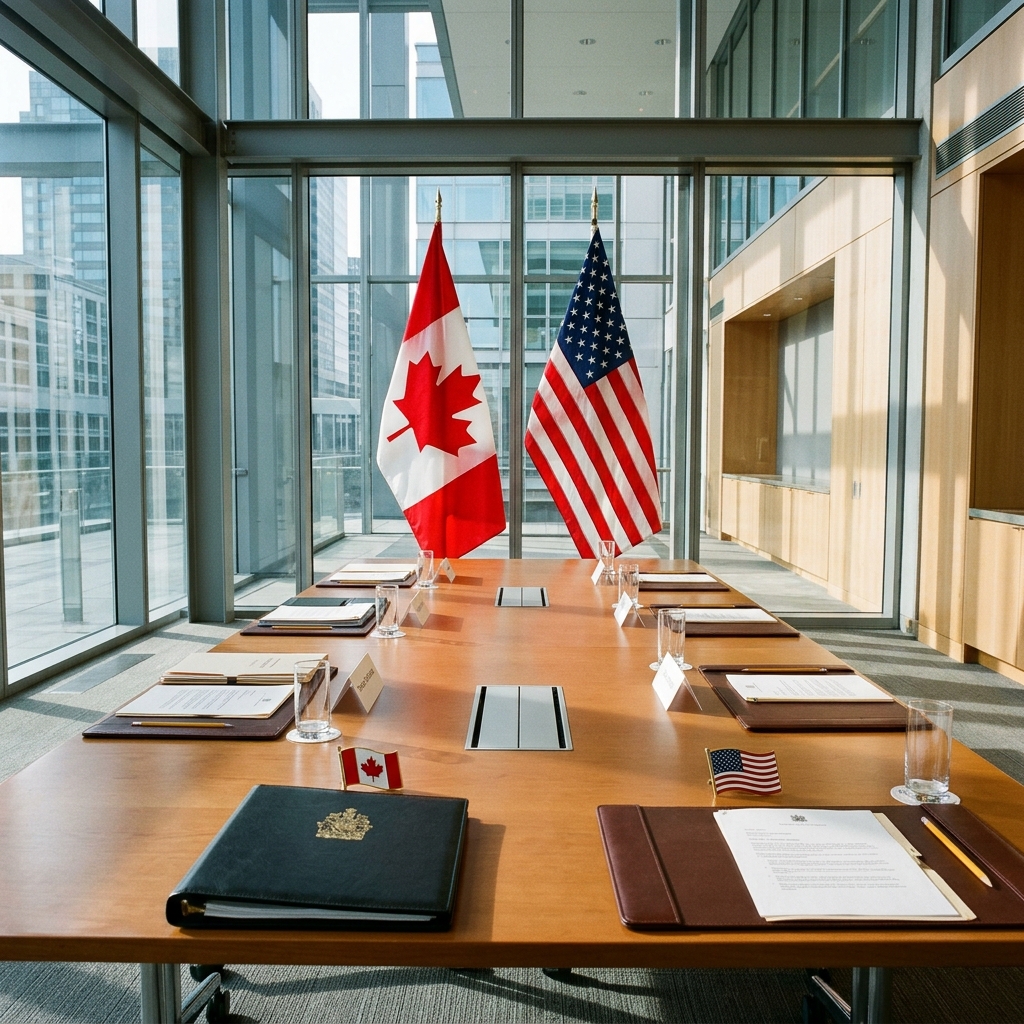
The unexpected timing of Prime Minister Mark Carney's high-level outreach to Donald Trump, first reported by the Stamford Advocate, underscores the urgency felt in Ottawa as American voters prepare to head to the polls. With congressional control hanging in the balance, Carney initiated back-channel and direct discussions to decouple Canadian industrial exports from broader Republican campaign rhetoric on universal baseline tariffs. Drawing on his tenure at the Bank of Canada and Bank of England, Carney framed cross-border integration as a continental inflation buffer. The talks signal Canada's proactive stance in mitigating protectionist spillover before election-night returns reshape Capitol Hill committees.
The reporting highlights meetings involving senior economic advisers, conducted in part through tri-state business channels with deep ties to Wall Street and cross-border manufacturing. Donald Trump's repeated threats to impose an across-the-board minimum ten percent tariff on foreign imports had created acute anxieties for Canadian exporters, who send roughly seventy-five percent of their outbound goods southward. By securing direct dialogue, Carney sought to reaffirm the special status established under the original Canada-United States-Mexico Agreement negotiations. Canadian officials emphasized that disrupting integrated automotive and energy supply chains would disproportionately raise production costs for manufacturers in swing states like Michigan, Ohio, and Pennsylvania.
Market participants monitored the development closely, prompting a mild relief rally for the Canadian dollar, which gained forty basis points against the greenback following the report. Institutional investors in Toronto and New York had begun pricing in significant policy divergence, widening credit spreads for Canadian auto parts suppliers and midstream energy companies. Carney's intervention temporarily anchored market sentiment, demonstrating that Ottawa intends to leverage high-level technocratic relationships rather than wait for post-election statutory realignments. However, analysts at major Canadian chartered banks warn that any verbal progress remains vulnerable to shifting executive priorities once the midterm tallies are finalized.
2. CUSMA Article 34.7 and the Looming Statutory Joint Review
At the heart of the bilateral exchanges lies the impending 2026 review under Article 34.7 of the Canada-United States-Mexico Agreement. The statutory clause requires all three signatory nations to conduct a formal assessment of the pact six years after its entry into force. A failure to reach unanimous written confirmation to extend the agreement initiates a sequence of annual joint reviews, exposing commercial actors to rolling uncertainty. Carney's administration is treating the current diplomatic window as an opportunity to set the terms of reference for this review early, preventing the treaty from becoming a casualty of unilateral executive renegotiation.
Discussions reportedly addressed contentious disputes that have tested the bilateral framework, notably Canadian supply management for dairy products and the ongoing friction over digital services taxes. The Office of the United States Trade Representative has consistently argued that Canadian tariff-rate quotas unfairly restrict American dairy access, a position that Trump champions in rural constituencies. Carney countered by presenting revised market-access data and reiterating Canada's willingness to address administrative bottlenecks without dismantling domestic farm stabilization programs. This technical calibration aims to trade agricultural concessions for ironclad exemptions on Canadian heavy manufacturing and critical mineral shipments destined for American defense suppliers.
Rules of origin for passenger vehicles and light trucks remain an equally volatile regulatory battleground. While Canada and Mexico previously prevailed in a formal dispute settlement panel regarding the calculation of regional value content, enforcement interpretation remains contentious among American trade hawks. Carney's delegation argued that current assembly standards already deliver historic levels of continental value retention, particularly in battery component manufacturing. By harmonizing these standards prior to formal statutory review dates, Ottawa hopes to insulate joint automotive investments across southern Ontario and the American Midwest from disruptive administrative audits or retaliatory border adjustments.
3. Regional Supply Chains, Critical Minerals, and Energy Corridors
Beyond commercial trade statutes, the Carney-Trump discussions concentrated on energy security and strategic raw materials, areas where Canada holds unique structural leverage. Northern Ontario and Quebec possess immense reserves of lithium, nickel, cobalt, and graphite, resources essential for the industrial base of North America. Carney linked continued bilateral trade stability directly to the joint Critical Minerals Production Alliance, warning that arbitrary trade barriers would delay private capital expenditure across the sector. United States defense contractors and industrial conglomerates have increasingly lobbied Washington to treat Canadian extraction and refining operations as domestic domestic sources under Title III of the Defense Production Act.
Energy infrastructure was also prominent in the negotiations, with the Stamford Advocate report indicating specific reference to cross-border pipeline flows and electricity grids. Enbridge Line 5, which supplies light crude and natural gas liquids through Michigan to refineries in Ontario and Ohio, has long faced regional regulatory challenges. Carney underscored that reliable Canadian hydrocarbons lower input expenses for American refiners, insulating consumers from global crude shocks. Simultaneously, Hydro-Quebec's planned electricity exports to the New England and New York grids through high-voltage direct current lines demonstrate that decarbonization goals remain interdependent with secure, tariff-free bilateral power transmission agreements.
Industrial leaders in manufacturing hubs welcomed the diplomatic momentum while remaining cautious about structural execution. The Canadian Manufacturers and Exporters trade association issued a statement noting that supply chains cannot absorb sudden border tariffs without severe job losses on both sides of the frontier. Cross-border freight corridors, including the Ambassador Bridge and the new Gordie Howe International Bridge, support billions in daily commerce that depend on just-in-time logistics. By taking the initiative to address these logistical dependencies directly with Trump, Carney attempted to convert complex industrial realities into political insulation before the American electoral cycle concludes.
4. Institutional Realignments and Post-Election Legislative Strategy
The broader institutional architecture of Canada-US economic diplomacy is shifting toward direct executive engagement supported by provincial premiers. Ontario Premier Doug Ford and Alberta Premier Danielle Smith have actively pursued subnational lobbying efforts, meeting with American governors and business roundtables across the industrial corridor. Carney's central intervention coordinates these disparate provincial voices into a unified federal front. This dual-track strategy ensures that while Ottawa engages directly with the highest political levels in Washington, provincial leaders reinforce the message among state-level legislators who feel the immediate employment consequences of trade disruptions.
The post-midterm legislative calendar in Washington will dictate the speed and durability of any bilateral understandings reached during these preliminary talks. If the incoming Congress adopts a combative protectionist posture, Carney will face pressure from domestic opposition parties to adopt retaliatory measures under the Department of Finance's tariff authority. Such reciprocal actions were successfully deployed in 2018 against American consumer products, bourbon, and steel, creating localized political pain points in key congressional districts. Carney, however, appears determined to avoid a tit-for-tat escalation, prioritizing negotiated safe-harbor agreements for integrated strategic sectors instead of reactive countermeasures.
Ultimately, the Stamford Advocate report sheds light on a pragmatic diplomatic pivot by Canada's leadership. Rather than relying on traditional multilateral forums or awaiting the outcome of complex American domestic elections, Carney has deployed high-stakes economic diplomacy at a moment of maximum leverage. The success of this gambit will be measured by whether the informal understandings survive the volatile immediate aftermath of the vote. If preserved, these early talks could establish an operational blueprint for navigating the 2026 CUSMA review, protecting cross-border enterprise from systemic trade shocks and maintaining continental competitiveness in an increasingly fragmented global economy.