1. The Diplomatic Reset: Central Banking Realism Meets America First
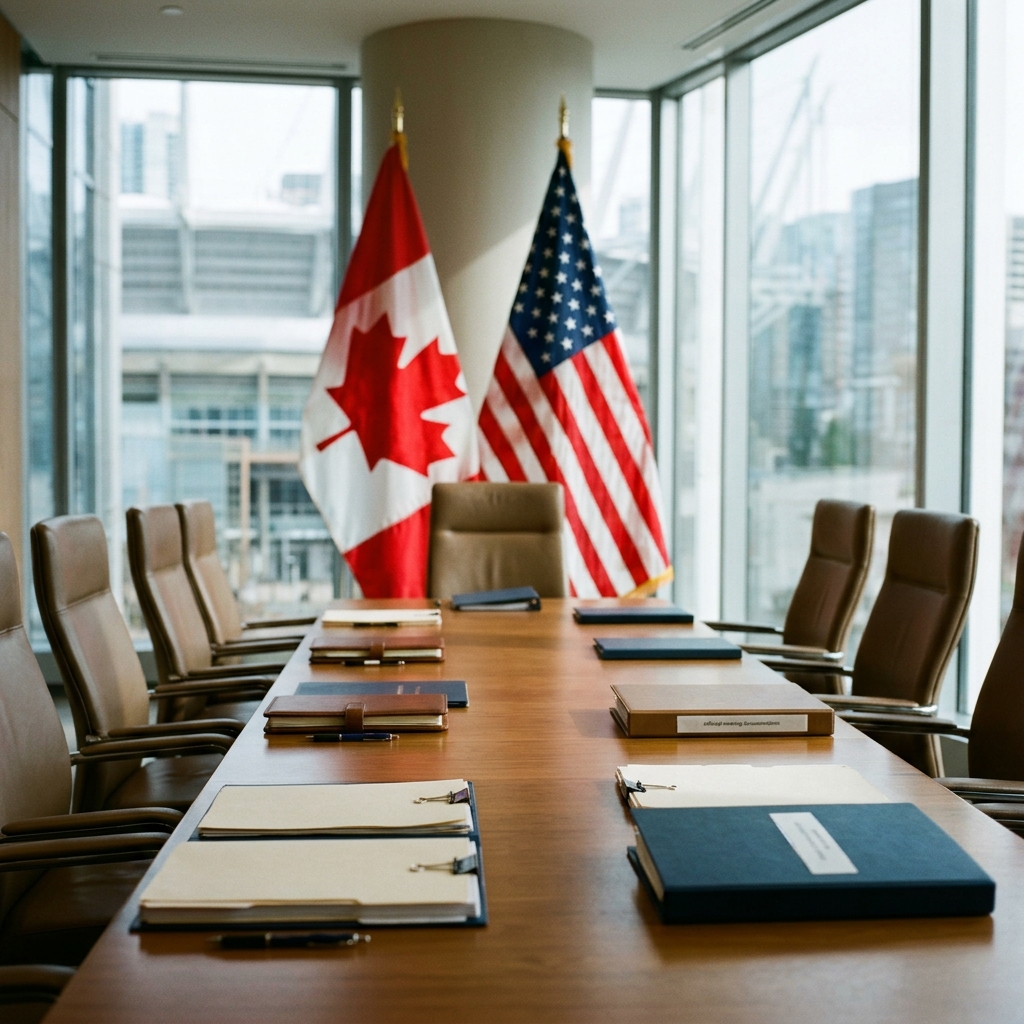
The bilateral phone call between Canadian Prime Minister Mark Carney and Donald Trump marks an immediate shift in tone along the northern border. Carney, drawing directly on his tenure leading both the Bank of Canada and the Bank of England, approached the discussion through the lens of macro-financial stability rather than political confrontation. According to senior Canadian officials briefed on the exchange, Carney framed the 1.3 trillion dollar annual cross-border commercial relationship as an integrated production platform. He emphasized that punitive tariffs on Canadian goods would inflict direct supply-side shocks on American manufacturing clusters in the Midwest.
Trump described the engagement as productive while reiterating his standard critique of bilateral trade asymmetries, particularly focusing on energy flows and dairy market access. The former central banker's technocratic reputation provided an operational baseline that had been conspicuously absent during previous cycles of Ottawa-Washington friction. Rather than relying on broad diplomatic platitudes, Carney presented detailed balance-sheet realities regarding cross-border supply chains. He specifically highlighted that intermediate inputs account for over sixty percent of bilateral merchandise trade, meaning trade barriers would tax domestic manufacturers on both sides of the frontier.
The initial warmth of the call temporarily quiets immediate anxieties on Bay Street and Wall Street regarding across-the-board tariffs under the International Emergency Economic Powers Act. However, trade attorneys in Washington caution that cordial telephone exchanges do not dismantle structural policy disputes. Carney must balance his overtures toward the White House with domestic political realities in Ontario and Quebec, where industrial unions and agricultural lobbies demand unyielding defense of current market protections.
2. CUSMA 2026 Review and Statutory Vulnerabilities
The strategic backdrop to the Carney-Trump conversation is the approaching July 2026 joint review mandated by Article 34.7 of the Canada-United States-Mexico Agreement. Under this statutory sunset mechanism, all three member states must formally agree in writing to extend the agreement for an additional sixteen-year term. If any party refuses, the pact enters an annual review cycle that introduces capital-paralyzing regulatory uncertainty for corporate planners. Trump has repeatedly signaled his intent to use the 2026 checkpoint to extract unilateral concessions on rules of origin and cross-border customs enforcement.
Of particular concern to Ottawa is the vulnerability of Canada's supply-managed dairy sector and steel exports to renewed Section 232 national security investigations. During the call, Carney signaled flexibility on digital services taxation and border enforcement coordination, while standing firm on the core dispute settlement panels housed under CUSMA Chapter 10. The Canadian prime minister understands that losing independent bi-national review mechanisms would leave resource exporters entirely at the mercy of the United States Department of Commerce and the International Trade Commission.
Automotive manufacturing remains the most sensitive sector within this regulatory framework. Under current CUSMA standards, passenger vehicles require seventy-five percent regional value content and forty to forty-five percent labor value content produced by workers earning at least sixteen dollars per hour. Carney reminded the American administration that automotive assemblies routinely cross the Detroit River multiple times before completion. Disrupting this integrated supply chain would depress equity valuations for major automakers operating in both Windsor, Ontario and Detroit, Michigan.
3. Energy Security, Critical Minerals, and Supply Chain Integration
Carney's primary economic leverage in conversations with Trump rests on the physical integration of continental energy assets. Canada remains the largest foreign crude supplier to the United States, sending over four million barrels daily through infrastructure networks operated by Enbridge and TC Energy. With the newly operational Trans Mountain expansion providing alternative tidewater export capacity to Asian markets, Ottawa holds slightly stronger commercial alternatives than it possessed during the original NAFTA renegotiation in 2017.
The dialogue also addressed the continental critical minerals strategy, an area where Carney has pushed for expedited environmental approvals under the Impact Assessment Act. The United States Department of Defense has funded Canadian mining ventures under Title III of the Defense Production Act to secure direct access to nickel, lithium, and rare earth elements. Carney framed these upstream Canadian assets as vital security shields against supply cutoffs from China, directly appealing to the economic security priorities of Trump's trade advisors.
Agricultural disputes continue to cast a shadow over bilateral harmony. The Office of the United States Trade Representative remains dissatisfied with Canada's administration of dairy tariff-rate quotas, arguing that Ottawa restricts access for American retail-packaged milk products. In response, Canadian negotiators are quietly offering adjustments to administrative quota allocations in exchange for clear American exemptions on proposed industrial tariffs, attempting to resolve long-standing trade irritants through technical concessions.
4. Financial Market Implications and Cross-Border Corporate Strategy
Financial markets responded to the Carney-Trump dialogue with modest optimism, narrowing the Canadian dollar's discount and easing sovereign yield spreads. Prior to the call, options markets had priced in significant risk premiums on the loonie due to threats of universal import levies. Following reports of a constructive discussion, two-year cross-currency swap bases tightened, reflecting reduced fear of sudden, disruptive protectionist executive orders. Institutional investors interpreted the exchange as evidence that bilateral commerce will remain anchored to institutional negotiation rather than unilateral decrees.
For corporate treasurers operating cross-border logistics, the immediate priority remains structural risk mitigation. Major multinational firms are avoiding aggressive long-term capital outlays along the border until the parameters of the 2026 CUSMA renegotiation clarify. Instead, supply chain managers are adopting dual-sourcing strategies and renegotiating long-term procurement contracts to include statutory pass-through provisions for potential tariffs. Carney's intervention provides breathing room, but executives recognize that trade stability depends on continuous, delicate alignment between two starkly different economic ideologies.
The Bank of Canada must also calibrate monetary policy against this fluctuating trade posture. Tariff threats complicate inflation forecasts and capital formation assessments across resource-heavy provinces like Alberta and manufacturing centers in southern Ontario. Governor Tiff Macklem and his Governing Council must evaluate whether currency volatility driven by protectionist rhetoric warrants defensive interest rate adjustments. Carney's ability to maintain direct, stabilizing communication with Trump will serve as an essential variable in determining Canada's macroeconomic trajectory over the coming fiscal cycle.