1. Diplomatic Backchannels and the Shadow of Executive Trade Powers
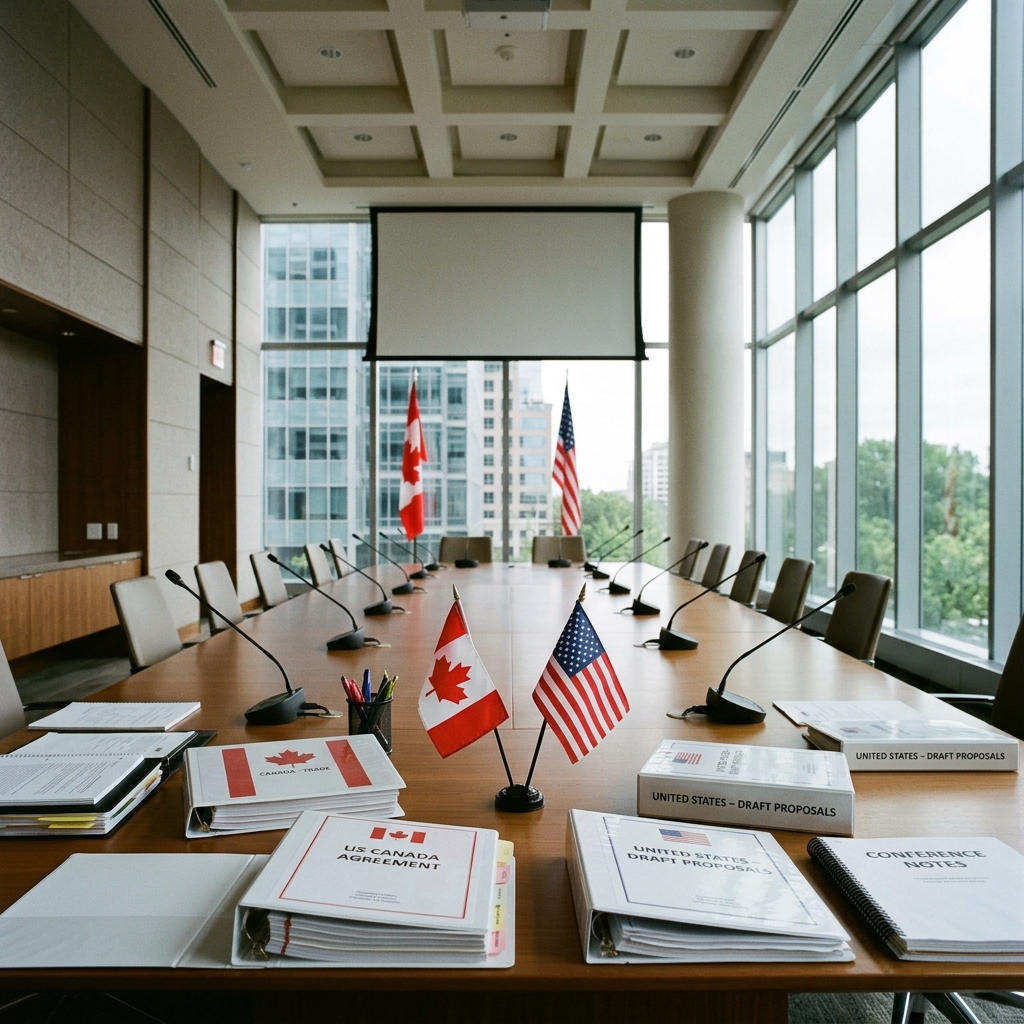
Mark Carney's emergence as an envoy in high-stakes trade discussions with the United States marks an intentional shift in Ottawa's economic diplomacy. Reporting from the Times Union underscores that Carney, leveraging his credibility as former governor of both the Bank of Canada and the Bank of England, has established direct lines to American trade strategists. His assessment of tangible progress reflects an urgent drive to stabilize North American commercial ties before protectionist pressures intensify. With tariff rhetoric escalating across southern jurisdictions, federal officials in Canada seek seasoned technocrats capable of negotiating complex fiscal and regulatory alignments.
The political reality in Washington complicates Carney's measured optimism. Donald Trump reiterated his familiar posture by describing the current state of negotiations as merely the 'concept' of a deal. This rhetorical dampener suggests that while technical teams can draft parameters on supply chain integration and border security measures, executive sign-off remains contingent on transactional leverage. For Canadian trade negotiators, moving Trump from abstract concepts to enforceable commitments requires addressing American grievances over digital services taxation, dairy supply management quotas, and steel transshipment protocols without compromising core Canadian industrial policy.
The dialogue takes place under the legal authority of United States trade statutes, notably Section 232 national security provisions and the International Emergency Economic Powers Act. Canadian trade officials remember the fraught negotiations of 2018 that overhauled NAFTA into the United States-Mexico-Canada Agreement. By deploying Carney, the Canadian federal government intends to present an economic rationale centered on integrated energy security, continental automotive platforms, and coordinated critical mineral processing, thereby attempting to neutralize threats of blanket universal baseline tariffs before they materialize into formal executive orders.
2. Automotive Interdependence and Critical Mineral Supply Chains
The corridor running from Southern Ontario through Michigan, Ohio, and Indiana represents the most vulnerable industrial link in these bilateral discussions. Automotive components cross the Detroit-Windsor border multiple times before final assembly at plants operated by General Motors, Ford, and Stellantis. Carney's reported progress focuses heavily on preserving these duty-free logistics corridors, which rely entirely on CUSMA rules of origin standards requiring seventy-five percent North American content. Any disruption introduced by unilateral border measures would immediately compress operating margins for original equipment manufacturers and downstream parts suppliers alike.
Simultaneously, the United States relies extensively on Canadian extractions of nickel, lithium, cobalt, and graphite to fulfill Pentagon procurement requirements and support domestic advanced battery manufacturing. The Times Union account indicates that bilateral discussions emphasize institutional alignment under the Defense Production Act, which treats Canadian facilities as domestic sources. Carney's financial background allows him to frame Canadian resource extraction not as competitive trade, but as vital continental infrastructure essential for decoupling North American supply chains from East Asian dominance, thereby offering Trump a tangible geopolitical justification for bilateral cooperation.
However, industrial friction persists over clean energy subsidization. The United States Inflation Reduction Act introduced aggressive local manufacturing incentives, prompting Ottawa to commit billions through Canada Growth Fund contracts and targeted investment tax credits. In negotiations, American representatives continue to challenge these parallel Canadian subsidies as distortive, while Ottawa insists they are necessary to maintain parity across the Great Lakes industrial basin. Carney must reconcile these competing industrial policies so that Trump can claim victory on domestic job creation while preserving Canadian plant operations.
3. The 2026 CUSMA Joint Review and Trade Realpolitik
The structural backdrop to Carney's engagement is the impending 2026 joint review clause embedded within Article 34.7 of CUSMA. This mechanism mandates all three member countries to assess the treaty's functioning and confirm its sixteen-year extension. Trump's characterization of talks as a 'concept' functions as leverage aimed at extracting early Canadian concessions ahead of this statutory milestone. By withholding formal affirmation, American political figures ensure that Ottawa remains defensive regarding long-standing market access disputes, particularly those governed by dispute settlement panels under Chapter 31 of the agreement.
Agricultural disputes continue to serve as a recurring sticking point in bilateral discussions. American dairy producers, represented by the International Dairy Foods Association and backed by lawmakers across Wisconsin and New York, consistently lobby for the dismantling of Canada's supply management system and tariff-rate quota administration. While Carney lacks a direct ministerial mandate to alter agricultural regulations, his discussions must address how Canada can offer market flexibility on non-sensitive tariff lines to prevent agricultural disputes from derailing broader economic frameworks involving manufacturing, intellectual property, and service exports.
Financial markets have reacted to the Times Union report with cautious restraint, pricing in persistent trade volatility. The Canadian dollar remains sensitive to shifts in American trade rhetoric, with foreign exchange desks closely monitoring whether bilateral progress transitions into a structured memorandum of understanding. Institutional bondholders and corporate treasurers recognize that prolonged ambiguity risks deferring capital expenditures across Canadian capital-intensive sectors, compelling companies to hedge against cross-border friction through increased domestic inventory holding and duplicate logistics infrastructure in the United States.
4. Strategic Implications for Corporate Treasuries and Cross-Border Capital
For corporate leaders operating within the Canada-US economic corridor, the distinction between Carney's reported progress and Trump's conceptual framing requires careful planning. Multinational enterprises cannot afford to wait for final political consensus before stress-testing their commercial contracts. Corporate legal teams are already inserting robust tariff-allocation clauses into long-term procurement agreements, while cross-border logistics operators analyze potential customs clearance delays at key crossing points such as the Peace Bridge, the Ambassador Bridge, and the newly operational Gordie Howe International Bridge.
Energy infrastructure represents another foundational pillar within the ongoing bilateral dialogue. Canadian crude exports delivered via the Enbridge Mainline and the Trans Mountain expansion supply critical heavy barrels to refineries throughout the US Midwest and Gulf Coast. Any broad-based American trade actions that fail to exempt raw hydrocarbons would inevitably trigger higher feedstock costs for American refiners, ultimately driving up consumer fuel prices. Carney's high-level engagements emphasize this vulnerability, demonstrating that punitive trade actions harm domestic American industrial competitiveness just as severely as they damage Canadian exporters.
Looking forward, the pathway from a conceptual understanding to an enforceable commercial agreement will depend on whether technical negotiators can draft workable bilateral carve-outs. Mark Carney has proven capable of articulating complex financial realities to skeptical audiences, but Trump's political doctrine demands clear domestic political victories. As these negotiations progress toward the 2026 review timeline, Canadian policymakers must remain prepared to offer targeted concessions on border security and defense spending to preserve the comprehensive duty-free market access that underpins the Canadian national economy.