1. Federal Cabinet Designation and the Roberts Bank Terminal 2 Mandate
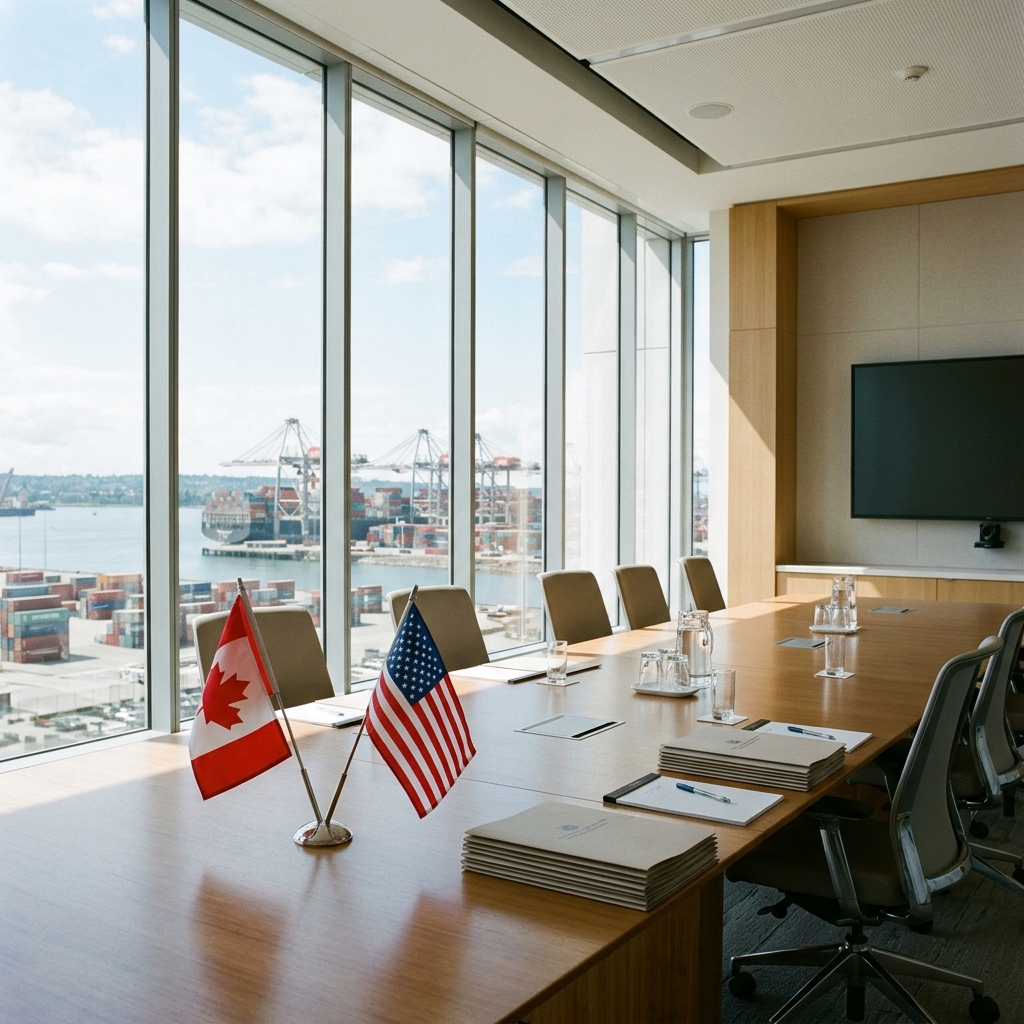
The federal cabinet has formally designated the long-delayed Roberts Bank Terminal 2 project in Delta, British Columbia, as an infrastructure priority of urgent national interest. Transport Minister Anita Anand and the Cabinet Committee on Economy, Inclusion and Climate finalized directives instructing federal agencies to accelerate outstanding permits under the Fisheries Act and the Impact Assessment Act. The decision marks an aggressive stance by Ottawa to counter capacity exhaustion across Pacific gateway terminals. Vancouver Fraser Port Authority officials project that without this terminal, Canada faces significant supply chain rationing before the end of the decade.
The designation arms the Vancouver Fraser Port Authority with political capital to advance procurement for a three-berth marine container terminal on a newly built 108-hectare landmass. Valued at more than 3.5 billion Canadian dollars, the project will expand container capacity at Canada's largest commercial port by 2.4 million twenty-foot equivalent units annually, representing an increase exceeding thirty percent. Federal approval conditions originally imposed eighty binding environmental safeguards, yet this new executive order streamlines inter-agency reviews across Environment and Climate Change Canada and Fisheries and Oceans Canada to prevent legal and procedural stagnation.
Ottawa's declaration reflects escalating alarm among industrial stakeholders regarding national economic sovereignty. Grain shippers across Saskatchewan, metallurgical coal producers in the Elk Valley, and automotive component importers have faced recurring disruptions from labor actions and terminal congestion. By elevating Vancouver's expansion to an overriding national interest, the federal government aims to insulate the port from provincial delays and municipal pushback from the City of Richmond and Delta. Federal officials contend that maintaining state-of-the-art port capacity is an indispensable national security objective that directly determines Canadian international commercial credibility.
2. The Indo-Pacific Strategy and Buffering US Tariff Exposure
Driving this policy escalation is Canada's explicit push to insulate its domestic economy from US protectionist sentiment ahead of the 2026 review of the United States-Mexico-Canada Agreement. While eighty percent of Canadian exports still cross the southern land border, Ottawa has committed billions to its Indo-Pacific Strategy, seeking direct trade pacts with ASEAN economies, Japan, South Korea, and Taiwan. Expanding the Vancouver terminal network provides western commodity producers with reliable seaborne routes to Asian buyers, dampening vulnerability to sudden tariff shifts or Buy American procurement mandates imposed by future administrations in Washington.
The port expansion provides essential export throughput for western Canadian primary resources seeking transpacific markets under the Comprehensive and Progressive Agreement for Trans-Pacific Partnership. Potash Corporation of Saskatchewan, Nutrien, and agricultural exporters represented by the Western Canadian Wheat Growers Association have long warned that container shortages cap their ability to capture premium Asian demand. Roberts Bank Terminal 2 will augment dual-use dry bulk and container processing capabilities, allowing agricultural shippers to package specialty pulse crops and identity-preserved grains directly into marine containers rather than relying exclusively on bulk handling.
Beyond agricultural staples, the national priority designation aligns with Canadian aspirations to export high-value mineral products essential to global clean technology supply chains. Mining firms operating in British Columbia, Alberta, and the Northwest Territories require unconstrained access to ocean carriers to move copper, cobalt, and refined lithium to Asian battery manufacturers. Expanding containerized throughput at Vancouver prevents these volumes from diverting southward through US ports such as Seattle and Tacoma, thereby preserving domestic customs receipts and keeping critical supply chain logistics directly under Canadian sovereign oversight.
3. Cross-Border Rail Corridors and Midwest Market Competition
Vancouver's expansion directly impacts continental rail corridors operated by Canadian National Railway and Canadian Pacific Kansas City. Both Class I carriers operate mainline tracks feeding cargo from Vancouver terminals into the industrial heartlands of Illinois, Michigan, and the broader US Midwest. Approximately twenty percent of containerized imports entering through the Port of Vancouver are routed onto direct intermodal trains destined for cross-border transit points like Chicago and Detroit. The addition of Roberts Bank Terminal 2 will offer international ocean shipping lines a viable, high-capacity alternative to congested West Coast US facilities.
Competition between the Port of Vancouver and the Northwest Seaport Alliance, comprising Seattle and Tacoma, is set to intensify under this federal support. Historical data demonstrates that cargo diversions often turn on vessel turnaround velocity and rail dwell times. By constructing automated, high-throughput ship-to-shore gantry crane systems and dedicated on-dock rail yards, the port authority expects to lower container dwell times significantly below four days. This logistical efficiency provides CPKC and CN with a sharper competitive edge against US railroads such as BNSF and Union Pacific for lucrative Asian import flows.
The rail integration strategy also eases friction along the congested Roberts Bank rail corridor traversing the Lower Mainland. Transport Canada and port authorities have mapped supplementary investments in highway grade separations and double-tracking across rail chokepoints in Pitt Meadows, Surrey, and Langley. These rail enhancements are designed to handle double-stacked container trains measuring over twelve thousand feet without paralyzing regional passenger traffic. For midwestern US supply chain executives, a fully scaled Vancouver gateway offers a hedge against labor disruptions and environmental fees that increasingly burden ports in California.
4. Terminal Operator Friction, Regulatory Battles, and Capital Allocation
Despite federal prioritization, the Roberts Bank expansion faces formidable internal resistance within the Canadian marine logistics sector. GCT Global Container Terminals, which operates the existing Deltaport facility adjacent to the proposed development, has challenged the port authority in court. GCT argues that creating an entirely new artificial island terminal run by a competing third-party concessionaire will create excess capacity and harm local maritime competition. GCT has consistently proposed its own phased expansion, termed Berth 4, asserting that incremental upgrades would cost half as much as building Terminal 2 from scratch.
Environmental friction remains another point of contention that federal priority status cannot completely erase. The project area at the Fraser River estuary serves as a major feeding ground for western sandpipers and critical habitat for southern resident killer whales. Commercial fisheries and conservation coalitions have signaled intent to seek judicial reviews of federal authorizations. To address these vulnerabilities, the Vancouver Fraser Port Authority has committed several hundred million dollars to habitat offsetting programs, including artificial biofilm regeneration and strict vessel slowdown zones in Haro Strait and the Strait of Georgia.
Capital procurement presents the final complex challenge for Ottawa and the Vancouver Fraser Port Authority. Current estimates indicate construction costs could exceed 4.5 billion Canadian dollars due to construction material inflation and elevated interest rates. Ottawa envisions a public-private partnership structure, where a global concessionaire invests substantial private equity in terminal superstructures in exchange for a multi-decade operating lease. Maintaining financial discipline while negotiating commercial terms with global terminal operators like DP World or PSA International will determine whether this strategic project yields durable economic returns.