1. Tariff Architecture Collides with Intermediate Trade Reality
Washington often frames trade as a simple swap of finished retail goods. The arithmetic of US-Canada commerce tells a different story. Canada supplies raw materials, primary metals, electricity, and component subassemblies that American factories absorb directly into domestic production lines. US Census Bureau figures show that intermediate manufacturing materials and energy products make up three-quarters of the roughly $420 billion in annual imports from Canada. Levying border duties on these items amounts to a direct tax on factory floors in Illinois, Ohio, and Pennsylvania.
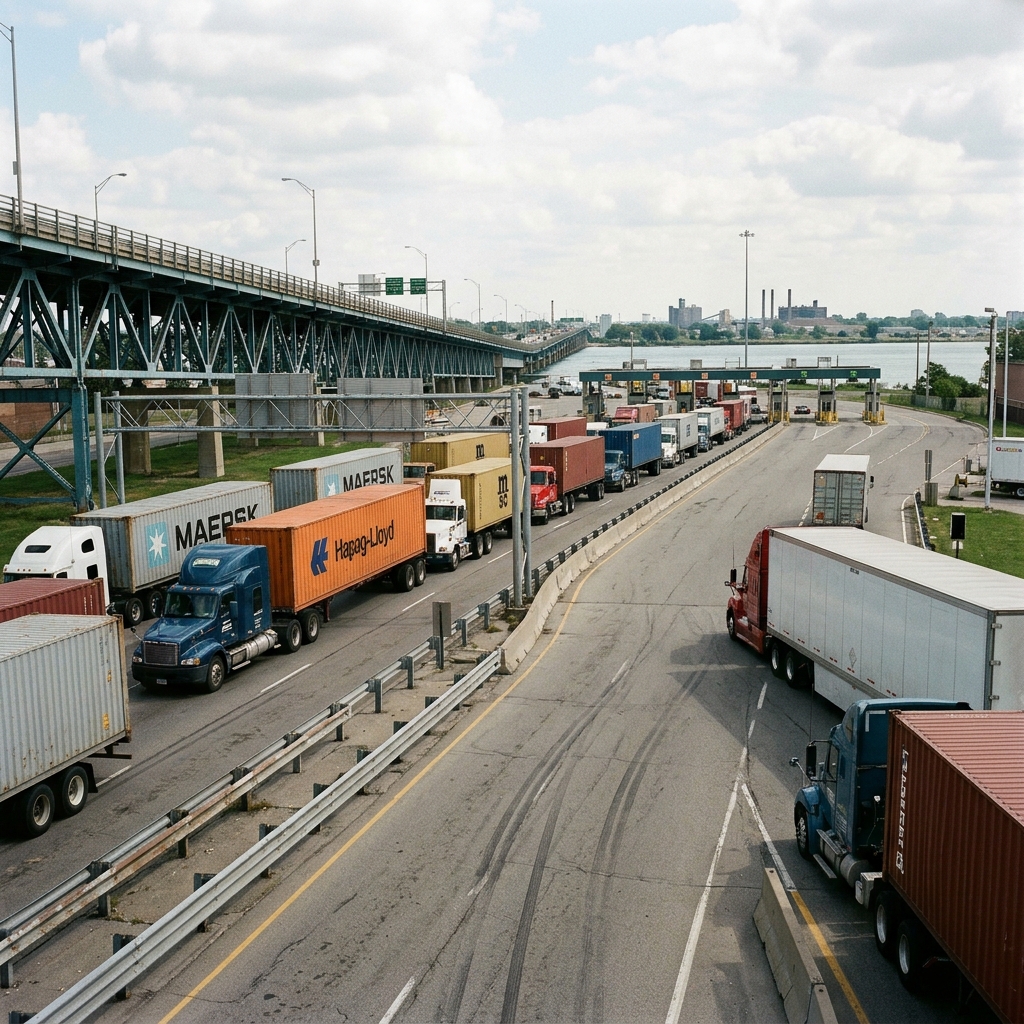
Duties collected under Section 232 or International Emergency Economic Powers Act directives hit the US importer of record immediately at crossing points like Port Huron or Detroit. American steel fabricators, automotive assembly plants, and chemical producers must pay U.S. Customs and Border Protection before shipments clear. Domestic alternatives are rarely available on short notice. Securing new domestic supplies requires years of capital spending and protracted environmental permitting reviews. In the meantime, the cost shock inflates factory-gate prices for American-made goods and cuts their edge in export markets.
Ottawa does not take these penalties lying down. During the 2018 metals dispute, the Department of Finance rolled out a dollar-for-dollar countermeasures package worth 16.6 billion Canadian dollars, zeroing in on consumer goods made in districts held by congressional leaders. A renewed tariff regime would trigger an equivalent counter-strike against American exports of agricultural machinery, processed foods, and plastics. That sort of trade spiral drains both national treasuries and crimps total output across the Great Lakes industrial basin.
2. Midwestern Refineries and Energy Grid Vulnerabilities
The energy corridor linking Alberta to the American interior exposes how deeply intertwined the two economies are. Canada delivers approximately 4.3 million barrels of crude oil across the border each day. Most of this volume moves through Enbridge's Mainline system and feeder pipelines that supply the PADD 2 refining cluster in the Midwest. Refineries in Whiting, Indiana and Wood River, Illinois run distillation towers specifically configured for Western Canadian Select. These plants cannot quickly pivot to light sweet crude from Texas or North Dakota without major operational delays, expensive blending, and steep drops in refinery yields.
Taxing Canadian crude imports triggers an immediate supply squeeze that feeds straight into retail gasoline and diesel prices throughout the Midwest. Domestic pipelines running north from the Permian Basin lack both the spare capacity and the sulfur-content specifications needed to replace millions of barrels of heavy crude. Refiners would have to pay the tariff surcharge or bid up seaborne cargoes from Latin America, incurring higher maritime freight rates and complicated port logistics.
Cross-border power transmission creates another point of friction for northern metropolitan areas. Hydro-Québec and the Ontario electricity grid export thousands of gigawatt-hours of clean base-load power into New York and New England every year through interconnected regional networks. If trade disputes disrupt existing delivery contracts or impose border taxes on electricity imports, wholesale power prices inside ISO New England and the New York Independent System Operator will spike. Commercial tenants, industrial plants, and residential households end up footing the bill.
3. The Disruption of Just-in-Time Great Lakes Auto Corridors
The North American automotive sector treats the border as an administrative detail rather than a physical wall. The Ambassador Bridge and the Blue Water Bridge hold this network together. Auto parts routinely cross between Michigan and Ontario six to eight times before reaching a final assembly line. Stamping plants in Windsor, engine shops in Essex, and assembly plants in Detroit operate as a single continuous line. Physical customs inspections or tariff payment snarls at border gates bring modern just-in-time logistics to an abrupt stop, especially for plants running on four-hour inventory buffers.
Port-of-entry wait times will climb rapidly if freight forwarders and customs brokers must post commercial surety bonds and verify product classifications under contested USMCA rules of origin. A simple two-hour delay at the Ambassador Bridge, which handles $400 million in commercial cargo daily, forces plant managers to shut down production lines on both sides of the Detroit River. Halting an assembly line costs between $20,000 and $50,000 per minute. Those losses erase the thin operating margins of tier-one suppliers in Michigan, Indiana, and Kentucky.
Rail networks run by Canadian Pacific Kansas City and Canadian National Railway move thousands of carloads of vehicle subassemblies, lumber, and bulk chemicals across the frontier each week. These freight corridors cannot be rerouted overnight to dodge border friction. As supply chains seize up, the Federal Reserve faces sticky core goods inflation, complicating its rate strategy. The Bank of Canada must simultaneously balance the blow of lost export volumes against currency depreciation sparked by cross-border capital flight.
4. USMCA Governance and the Strategic Threat to Capital Inflows
Unilateral duties cut against the dispute settlement mechanisms established under Chapter 31 of the United States-Mexico-Canada Agreement. Sidestepping treaty terms to pursue domestic goals chills corporate investment across the continent. Institutional investors require clear, enforceable trade rules before committing funds to capital-intensive industrial projects. Weakening those legal guarantees pushes multinational firms to delay large outlays for battery plants, semiconductor packaging facilities, and aerospace tooling throughout North America.
Smaller manufacturers bear the heaviest burden. Global conglomerates have the treasury operations needed to use foreign-trade zones, duty drawback programs, and transfer-pricing maneuvers to soften the blow. Small component shops operating on 4% net margins do not have that luxury. Upfront cash deposits required by U.S. Customs and Border Protection strain their balance sheets, exhausting working capital lines and pushing up borrowing spreads at regional commercial banks across the Midwest and the South.
The trade balance is lopsided: 77% of Canadian exports go south, giving Washington obvious leverage. Yet the American economy cannot insulate itself from the fallout. Cross-border production functions as one integrated network. Breaking those links with border tariffs lifts unit costs for domestic manufacturers, raises everyday energy and grocery bills for American families, and invites counter-tariffs on the nation's most competitive export sectors.